
Quick answer
Quick answer: If you suspect hurricane roof damage in Pensacola, put safety first. Do not climb onto a wet or damaged roof or approach downed power lines. From a safe location, photograph missing or shifted roofing, damaged flashing, fallen debris, interior stains, and any active leaks. Prevent additional interior damage using safe temporary measures, keep receipts, and contact your insurer if you may have a covered loss. A qualified roofing contractor can examine the roof system and provide a written assessment of repair or replacement needs.
Hurricane damage is not always obvious from the driveway. Strong winds may tear off shingles, shift tile, compromise flashing, loosen roof edges, or create openings that allow water to enter later. Sometimes a homeowner first notices a ceiling stain days after the weather has cleared. Other times the damage is obvious, but it is unclear whether the roof needs a localized repair or a more extensive replacement.
This guide focuses on practical decisions homeowners can make after a storm. It is especially relevant to Pensacola and nearby communities such as Gulf Breeze, Milton, Pace, and Navarre, where coastal exposure, wind-driven rain, and a mix of asphalt shingle, metal, and tile roof systems create different inspection considerations.
Key takeaways
- Stay off the roof. You can document many warning signs from the ground or from a safe indoor location. Leave climbing, probing, and temporary roof covering to qualified professionals.
- Look beyond missing shingles. Flashing, vents, ridge caps, roof edges, skylights, soffits, tile fasteners, and the underlying water barrier can also be affected.
- Photograph before repairs when safe. Record the location and timing of damage, then keep invoices and receipts for protective work.
- A leak does not automatically mean replacement. The appropriate scope depends on the roof's condition, the extent of the damage, materials, and applicable installation requirements.
- Separate construction advice from insurance advice. A roofing contractor can document observed construction conditions and prepare a repair estimate; insurance coverage questions belong with your insurer or an appropriately licensed professional.
What happened during Hurricane Isaias in the Pensacola area?
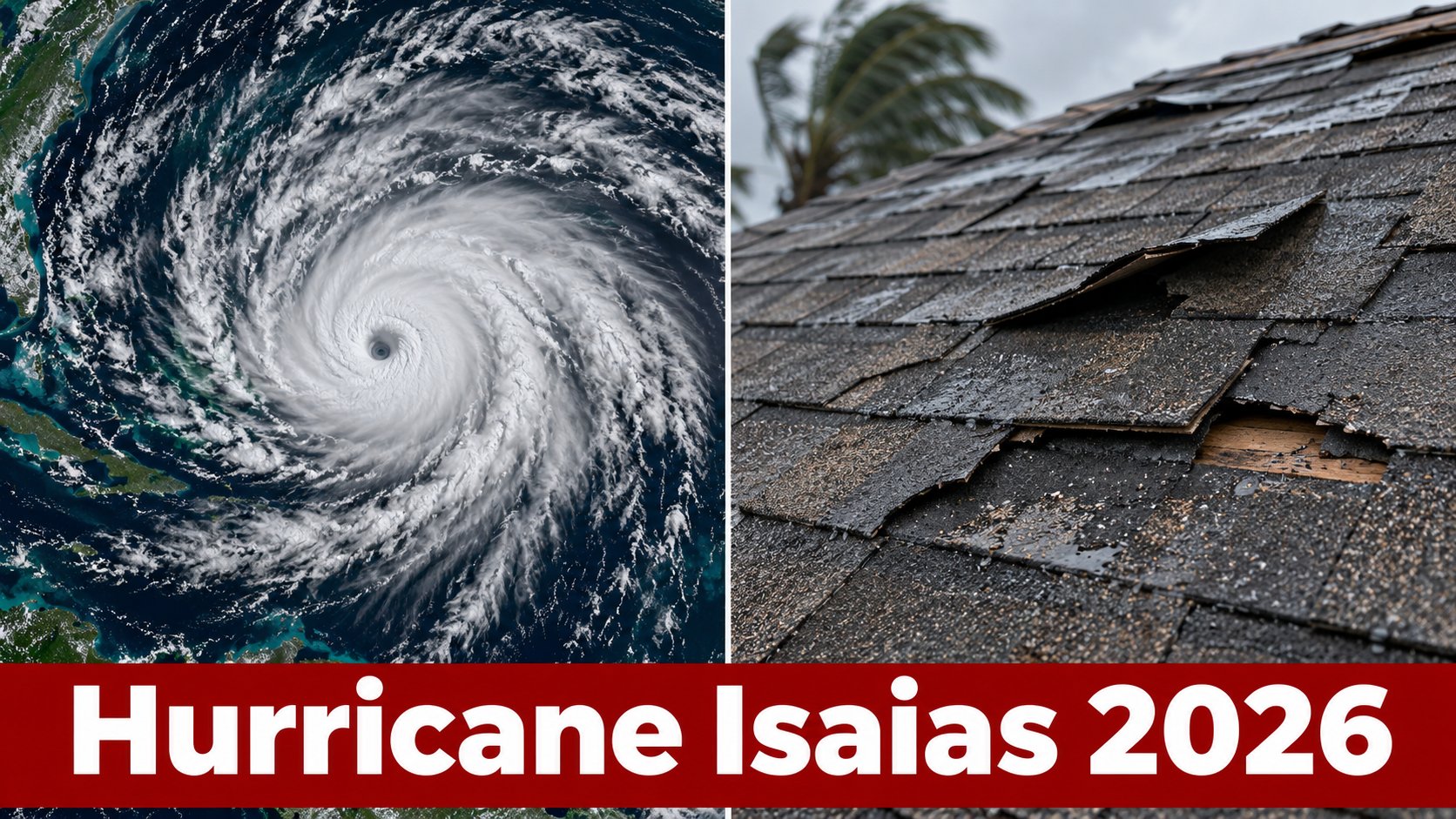
On October 9, 2026, Hurricane Isaias made landfall near Destin, east of Pensacola, with maximum sustained winds of approximately 105 mph, according to the National Hurricane Center. The NHC also reported a wind gust of approximately 100 mph near Pensacola around landfall. Those observations establish that damaging winds affected the western Florida Panhandle, but they do not establish that any particular property sustained roof damage. Individual conditions depend on wind exposure, roof design, age, installation, existing vulnerabilities, and falling debris.
For a home in Pensacola, Pensacola Beach, Gulf Breeze, Milton, Pace, or Navarre, an inspection is warranted when there are visible signs of distress or a credible reason to suspect damage. Do not assume that every home in the region needs a new roof, and do not assume an apparently intact roof has been conclusively cleared without examination.
Storm reference: National Hurricane Center: Isaias landfall update, October 9, 2026.
First 24 hours: A practical homeowner checklist
The order matters. Protect people first, reduce ongoing damage second, and document what happened before permanent repairs begin.
| Priority | What to do | Why it matters |
|---|---|---|
| 1. Safety | Stay clear of fallen wires, unstable trees, loose debris, standing water near electricity, and damaged structures. | Storm-damaged areas may remain dangerous after the winds stop. |
| 2. Interior protection | If safe, move belongings away from water, place containers under drips, and avoid wet electrical fixtures. | Limits additional damage while the roof is being assessed. |
| 3. Exterior observation | Photograph visible roof damage from the ground using your phone's zoom. | Creates a record without climbing the roof. |
| 4. Date and location | Note when the storm passed, when you first observed a leak, and which rooms or roof slopes appear affected. | Helps organize the assessment and any communications. |
| 5. Temporary protection | Arrange appropriate temporary weather protection if the roof is open to rain. | Helps reduce further water intrusion. |
| 6. Insurance contact | Contact your insurer promptly if you believe the damage may be covered. | Your insurer can explain reporting procedures, policy requirements, and claim next steps. |
| 7. Roofing assessment | Request a documented professional roof evaluation. | Helps determine the physical condition of the roof and construction options. |
Important: If there is significant structural movement, a sagging ceiling, a damaged electrical system, or water entering near energized fixtures, keep away from the affected area and seek appropriate emergency help. The CDC advises staying away from disaster-damaged buildings until they have been determined safe to enter.
Sources: CDC disaster-damaged building safety and Florida Department of Financial Services hurricane recovery guidance.
Seven signs a roof may have sustained hurricane damage
1. Missing, lifted, or creased asphalt shingles
Wind can break the adhesive bond between overlapping shingles, lift individual tabs, or remove sections entirely. A shingle may settle back into place after a gust yet remain creased or have a weakened seal. The roof's age, fastening, sealant condition, edge details, and installation all affect its ability to resist wind. The Insurance Institute for Business & Home Safety explains that changing wind pressures can act across the roof and across individual shingles.
Look for: bare patches, exposed underlayment, shingles in the yard, tabs that sit unevenly, displaced ridge caps, and visibly damaged roof edges. Do not try to lift shingles yourself to test the seal.
2. Shifted, cracked, or missing clay or concrete tile
Tile roofs can experience damage from wind, uplift, and debris impacts. A cracked tile can be difficult to identify from the ground, while a shifted tile may disturb overlaps or expose components underneath. Some failures are isolated; others involve attachment conditions or multiple sections of the roof.
Look for: displaced courses, broken pieces around the property, gaps in the tile pattern, and material collecting in gutters. Tile roofs can be hazardous to walk on, and untrained foot traffic can create additional breakage.
3. Loose metal panels, flashing, or ridge components
Standing seam and other metal roof systems depend on a complete assembly: panel profiles, clips or fasteners, seams, edge details, penetrations, and manufacturer-specified installation. Damage at a roof edge, ridge, or penetration may be more important than the appearance of the central panel field.
Look for: lifted edges, displaced trim, visibly distorted panels, loose ridge components, and signs of separation near vents or chimneys. Do not attempt to tighten fasteners or reseal a metal roof without a system-specific assessment.
4. Damaged flashing around vulnerable transitions
Flashing directs water away from penetrations and changes in roof geometry. Wind-blown debris or movement during severe weather can displace flashing at chimneys, skylights, roof-to-wall intersections, valleys, and pipe boots.
Look for: bent or detached metal, exposed seams, missing seal components, or new staining directly below a penetration. Water can travel along framing, so an indoor stain may not sit directly beneath the original opening.
5. Leaks or new attic moisture
Water entry can appear as a ceiling ring, damp attic insulation, discoloration along framing, dripping around a light fixture, or a musty odor. Wind-driven rain can expose vulnerabilities that remained dry under ordinary rainfall.
Look for: new stains and damp areas after the storm. Photograph them over time. Do not touch wet fixtures, remove suspect structural components, or enter an unsafe attic.
6. Damage to soffits, fascia, gutters, and roof edges
Roof-edge materials help protect the perimeter of the assembly and the spaces beneath the roof. Loss of soffit panels, fascia, or edge flashing may permit wind-driven rain to reach vulnerable areas and can signal greater uplift forces at roof perimeters.
Look for: hanging metal, missing soffit panels, separated gutters, and exposed wood at the eaves. These items should be included in the inspection scope, not treated as unrelated cosmetic details.
7. Tree strikes or impact damage
A fallen limb can crack tile, dent metal, puncture roof coverings, deform decking, or damage framing. Impact damage may extend beyond the point where the branch struck.
Look for: branches resting on the roof, openings, an altered roofline, or interior ceiling changes. Never climb onto a roof beneath a partially fallen tree. Tree removal and structural stabilization may need to precede roofing work.
Can a roof be damaged even when it is not leaking?
Yes. A roof can sustain damage to its covering, seals, edge attachments, or flashing before water finds a path into the house. Conversely, a leak after a storm does not by itself prove that the hurricane caused every condition on the roof. Aging materials, past repairs, installation defects, and unrelated penetrations can also contribute.
A useful roof assessment separates observed physical conditions from assumptions about their cause. The contractor should note the roof material, visible distress, affected areas, likely paths of water entry, and what additional examination would be needed. Photographs should identify specific conditions instead of merely showing a distant roof silhouette.
This distinction is especially important after major storms, when homeowners may receive conflicting opinions. A replacement recommendation should be tied to documented roof conditions and a reasoned construction scope, not simply to the strength of the hurricane or the number of neighboring roofs being replaced.
What should a professional storm-damage roof inspection include?
A meaningful inspection is more than a quick walk around the driveway. The exact method depends on roof access, weather, material, and safety. The contractor may use ground-level observations, aerial photography, appropriate roof access, attic observations, or specialized testing when justified and properly performed.
Roofing system identification
The report should identify the general roof covering and relevant assembly details, such as architectural shingles, standing seam metal, concrete or clay tile, natural slate, or a composite product. A roof with multiple slopes or materials may require more than one inspection method.
Roof-covering and perimeter conditions
The inspector should examine accessible areas for missing or displaced materials, ridge damage, edge attachment, exposed components, impact marks, and apparent loss of weather resistance. Particular attention may be appropriate at corners, eaves, ridges, penetrations, and roof-to-wall intersections because these are common vulnerability areas.
Flashing, underlayment, and possible water paths
Some underlayment and deck conditions cannot be confirmed without opening portions of the assembly. The report should explain what was actually visible and which conclusions remain uncertain. A contractor should not claim hidden damage was conclusively identified solely from an exterior overview.
Interior and attic observations, when safe
Visible water staining, damp decking, displaced insulation, and moisture patterns can help trace a leak. A stain is useful evidence, but may not pinpoint the exact exterior opening. Wet electrical components and unstable ceilings require specialized attention.
Photos, findings, and written recommendations
Request a clear written summary that identifies: the inspected areas, observed damage, photographic evidence, limitations of access, recommended immediate protection, and the proposed repair or replacement scope. If work is recommended, ask for an itemized construction estimate and an explanation of assumptions.
Questions to ask the inspector:
- Which conditions did you observe directly, and which require further investigation?
- Are there any active openings or water-entry concerns that need temporary protection?
- Can affected components be repaired while maintaining the roofing system's integrity and manufacturer requirements?
- Were roof edges, penetrations, flashings, and attic areas evaluated where safe and accessible?
- What photos and measurements support the proposed scope?
- Is permitting or a further structural evaluation likely to be required?
Temporary tarping versus permanent roof repair
Temporary covering can be appropriate when an opening risks allowing additional water into a home. Its purpose is to reduce exposure until a durable repair can be designed and completed. A tarp is not a new roof, and its performance depends on materials, attachment, roof geometry, remaining structural condition, and subsequent weather.
Do not attempt to install a tarp yourself on a compromised or wet roof. Improper attachment can create new holes, damage roofing materials, or become hazardous during another storm. Some roof types, including certain tile and slate systems, are difficult to cover without causing additional damage.
When a contractor performs protective work, keep the invoice, photos, and a description of the temporary measures. If a permanent repair will follow, ask how the existing protective covering will be removed and how its attachment points will be addressed.
Roof repair or roof replacement: How is that decision made?
No single symptom automatically requires full replacement. The right approach depends on whether a repair can restore a durable, properly integrated system and whether the underlying roof remains serviceable.
| Consideration | Localized repair may be appropriate when... | More extensive work may be appropriate when... |
|---|---|---|
| Damage extent | Damage is confined to a limited, accessible area. | Multiple roof planes or critical connections are affected. |
| Roof condition | Surrounding materials remain in serviceable condition. | Materials are broadly deteriorated or unable to accept a durable repair. |
| Material compatibility | Matching components and manufacturer-compliant details are available. | Compatible replacement components are unavailable or cannot integrate reliably. |
| Attachment and substrate | Decking and attachment remain suitable. | Decking, structural components, or attachment systems require widespread correction. |
| Water resistance | The weather barrier can be restored with a documented repair. | Water resistance cannot reasonably be restored through isolated work. |
| Economics | Repair provides a durable result relative to its cost. | Repeated repairs may be less practical than a properly planned replacement. |
For example, a small number of displaced tiles on an otherwise sound roof may support a targeted repair, but a roof with widespread tile loss, attachment problems, or damaged underlying components may call for a broader scope. Our guide on when roof replacement becomes necessary explains the warning signs in more detail. Likewise, a detached shingle ridge cap is a different condition from extensive shingle uplift across several slopes.
Florida code and permitting: Requirements depend on the property, scope, permit jurisdiction, and code provisions in force when work is performed. Avoid treating a simplified “25% roof rule” slogan as a universal replacement requirement. Have the contractor and local building department evaluate the actual proposed scope.
For more detail, see 1845 Roofing's Residential Roofing Services and Storm Restoration Services.
How to document hurricane roof damage for your records
A reliable record is factual, dated, and organized. It should not exaggerate damage or attribute every preexisting condition to the hurricane.
- Create a property folder. Use a descriptive name such as "Pensacola Roof - October 2026 Storm".
- Record the timeline. Note the storm date, first observed damage, first observed leak, and dates of subsequent rainfall.
- Take wide and close photographs from safe locations. Wide images show where damage sits on the building; close images show visible details. Keep the originals where possible.
- Photograph inside, too. Include ceiling stains, wet surfaces, damaged contents, and any ongoing water intrusion.
- Save repair and protection records. Keep written estimates, invoices, material receipts, and contractor photos.
- Log communications. Save dates, names, and the substance of conversations with contractors, your insurer, and other professionals.
- Keep versions of reports. Preserve the original inspection and any later supplemental construction findings so changes remain traceable.
Florida's Department of Financial Services advises homeowners to document damage with photos or video, promptly contact their insurer when a claim may be appropriate, take reasonable steps to prevent further damage, and retain receipts. The department also explains that policy obligations and deadlines must be reviewed with the insurer. Read Florida's hurricane insurance recovery resources.
Important insurance distinction
1845 Roofing can provide roofing observations, damage photographs, construction recommendations, and repair or replacement estimates within its professional scope. A roofing contractor does not decide insurance coverage, interpret your policy for you, negotiate a claim on your behalf, or guarantee an insurer will pay for a roof. For claim coverage or disputed policy questions, contact your insurer or an appropriately licensed insurance or legal professional.
The homeowner remains responsible for any applicable deductible under the insurance policy. No contractor should promise to waive it or encourage false or misleading claims.
Pensacola-area roofing considerations after a hurricane
The western Florida Panhandle combines inland neighborhoods, waterfront homes, salt-air exposure, and different types of roof construction. These differences matter when evaluating both storm damage and replacement materials.
Pensacola and nearby inland areas: Wind-driven debris, tree strikes, aging shingles, and roof-edge failures may be important to examine. A house shielded by surrounding buildings can have different wind exposure from an open-lot home even within the same ZIP code.
Gulf Breeze and Pensacola Beach: Salt exposure and wind-driven rain make corrosion resistance, penetrations, fastener compatibility, flashing, and long-term maintenance especially relevant. Coastal exposure alone does not establish damage, but it should influence the inspection and material-selection discussion.
Milton, Pace, and Navarre: Roof age, tree cover, installation quality, local wind exposure, and prior repairs can be more informative than city name alone. Avoid assuming all nearby properties experienced identical wind forces.
If a replacement is being considered, evaluate the entire roof assembly, not only the visible covering. Roof-deck attachment, water-barrier details, perimeter construction, ventilation, and manufacturer-specific installation can materially affect wind and water performance. For steps to take before the next storm season, see our Florida hurricane roof preparation guide. The Insurance Institute for Business & Home Safety emphasizes the importance of roof-deck attachment, sealed roof decks, and edge details in higher-wind construction.
Sources: IBHS: Wind and roof damage and DOE Building America: Hurricanes and high winds.
Choosing a roofing contractor after a major storm
When comparing roof proposals after a hurricane, focus on the proposed work, material choices, installation plan, schedule, and written terms.
A sound comparison should examine:
- Written scope: Understand what is being removed, repaired, replaced, and excluded.
- Materials and installation: Confirm the proposed product, system details, applicable approvals, and manufacturer instructions.
- Protection and cleanup: Ask how landscaping, property, debris, and daily weather protection will be managed.
- Schedule: Distinguish an estimated start window from a firm commitment. Material lead times and permit approvals may affect scheduling.
- Workmanship and product warranties: Request the actual written terms and understand the difference between manufacturer material coverage and contractor workmanship obligations.
- Payment and change orders: Understand deposits, progress payments, completion documentation, and how unforeseen conditions will be priced.
- Project coordination: Understand who will inspect, supervise, and perform the work and how project updates will be communicated.
Be cautious of anyone who pressures you to sign immediately, claims every damaged roof requires replacement without an inspection, promises guaranteed insurance approval, or offers to eliminate your deductible.
Next steps: Protect your home and make an informed roofing decision
When hurricane winds have affected your property, the first decision is not which roof to buy. It is whether the structure is safe, whether water is entering, what damage can be documented, and what a qualified inspection actually finds.
Start with safety and temporary protection. Collect photos and records. If you may have an insurance loss, communicate promptly with your insurer. Then obtain a written roofing assessment that explains the condition of the existing system, repair possibilities, and when replacement may be appropriate.
Request a roofing consultation with 1845 Roofing
1845 Roofing specializes in residential and specialty roofing systems, including composite, tile, slate, and architectural metal. If you own a property in the Pensacola area and need to discuss suspected storm damage, repair scope, or replacement options, contact our team to discuss your roofing project.
Request a Roofing Consultation | Explore Residential Roofing Services
This article provides general homeowner and construction information, not a property-specific inspection, engineering opinion, insurance adjustment service, or legal advice. Site conditions, permits, product requirements, and policy terms vary by property.
References
- National Hurricane Center, October 9, 2026: Hurricane Isaias landfall update.
- Florida Department of Financial Services: Hurricane Isaias recovery resources and Hurricane recovery checklist.
- Florida Department of Financial Services: General disaster insurance questions.
- CDC: Staying safe around buildings damaged after a disaster.
- Insurance Institute for Business & Home Safety: Wind and roof damage.
- U.S. Department of Energy Building America: Hurricanes and high winds overview.
Need Help With Your Roof?
Get a professional assessment from 1845 Roofing.
Frequently Asked Questions
How soon after a hurricane should I schedule a roof inspection?
If water is actively entering or there is an exposed opening, seek appropriate temporary protection promptly once conditions are safe. Otherwise, schedule an inspection when you see potential damage or have a credible concern, rather than waiting for an interior leak to develop. Availability will vary after a widespread storm.
Can hurricane winds damage a roof without removing shingles or tile?
Yes. Roof-covering seals, flashings, edges, penetrations, and attachment components can be affected even where large pieces are not missing. A qualified inspection can distinguish visible distress from conditions that need further investigation.
Does a ceiling stain prove my roof needs replacement?
No. A stain indicates moisture intrusion or past moisture, but it does not establish the full cause or required scope. The source should be investigated, and any unsafe electrical or structural conditions should be addressed first.
Should I wait for an insurance adjuster before protecting a leaking roof?
Reasonable temporary measures to prevent further damage may be necessary. Document damage beforehand when safe, keep receipts, and follow your insurer's instructions. Permanent work and coverage questions should be coordinated with your insurer and appropriate professionals.
Will homeowners insurance pay for hurricane roof damage?
Coverage depends on your specific policy, applicable deductibles, exclusions, facts of loss, and the insurer's determination. A contractor can prepare a construction assessment, but cannot promise or determine coverage. Contact your insurer for policy and claim guidance.
What if my roof looks fine from the ground?
That is reassuring but not conclusive. If you have no leaks, no visible distress, and no reason to suspect damage, avoid assuming damage simply because a storm passed nearby. If you notice displaced materials, debris strikes, unusual sounds, new staining, or other concerns, request an appropriate inspection.
Is a metal, tile, or composite roof automatically hurricane-proof?
No roofing system is hurricane-proof. Performance depends on the tested product or assembly, roof geometry, fasteners and attachments, installation, maintenance, and the actual storm conditions. Ask for product-specific performance information rather than relying on a broad material claim.